Stay off the grid; Don’t tell anybody anything
The Other Black Girl“Stay off the grid; Don’t tell anybody anything” is the paired instruction at the heart of the Resistance’s security culture. Presented as its two most important rules, the commands turn caution into a condition of participation: members are expected to reduce their exposure and withhold information, even when the secrecy feels stifling.
Meaning and Enforcement
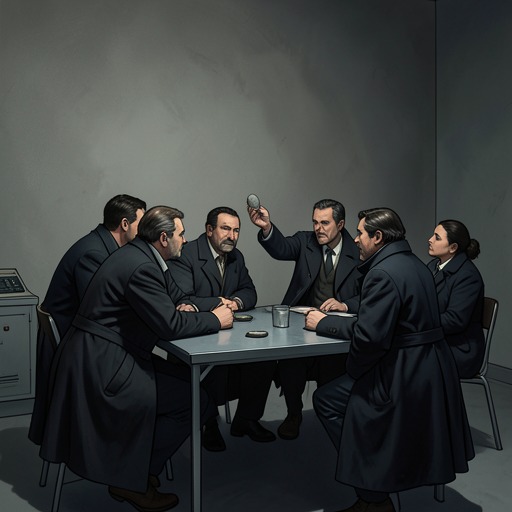
In Shani’s account, set at Joe’s Barbershop on September 27, 2018, the rules are described as the ones drilled most deeply into Resistance members. After Shani told Lynn that she would come to New York, Lynn spent nearly an hour explaining why Shani had to promise to follow them. The length of the lecture made the organization’s discipline feel demanding enough that Shani began to question whether she wanted to be involved at all.
The paired wording joins two forms of protection. Staying off the grid concerns exposure; telling nobody anything concerns disclosure. The account presents them not as casual advice but as rules Lynn insists Shani promise to observe before proceeding. Their force comes partly from repetition and instruction: the Resistance tries to make caution habitual before its members encounter danger.
Shani’s Compliance
The rules acquire practical weight when Lynn sends Shani a list of Eva’s changing identities and a map of her movements and the destruction left behind. Shani responds by deleting Twitter, Facebook, and Instagram, cutting off years of hair, and giving her mother a misleading explanation for leaving Boston: she says she experienced something racist at work and wants a fresh start. These acts are distinct forms of concealment—digital, physical, and personal—showing how the instruction reaches beyond what members say to how they present themselves and manage their connections.
The exchange also establishes the cost of compliance. Shani’s initial doubts arise from the rules’ rigidity, but the information about Eva persuades her that the danger warrants it. The rules therefore mark a shift from reluctance to action: Shani accepts restrictions she had found excessive once Lynn’s warning gives them a concrete context.
Secrecy and Restraint
The two foundational rules sit alongside a more specific directive: members must never confront an OBG or potential OBG unless directed. Lynn explains that the Resistance will need more complex ways to distinguish itself from its enemies and must remain vigilant. This prohibition makes secrecy part of a broader discipline of controlled action: members are not simply told to avoid disclosure but also to hold back from acting on suspicion without authorization.
Shani recalls that the directive restrained her when she saw Eva with Nella at Nico’s in August and again when Eva spoke about solidarity and diversity at Curl Central. Shani imagined confronting Eva, even grabbing one of her locs, but did not act. That contrast clarifies the rules’ function: they suppress the immediate impulse to challenge a suspected threat in favor of caution and collective direction. The paired command to stay unexposed and tell nothing thus belongs to a system that asks members to control both what they reveal and what they do.